Tuesday, April 8, 2014

Japan


Japan is a country located in East Asia.  It is an Island nation located in the Pacific Ocean.  It is also known as the "Land of the Rising Sun".  Japan is an archipielago of 6852 islands.  The capital of Japan is Tokio.
The national language spoken is japanese.

Flag:


Government:  The government in Japan is an Unitary parliamentary constitutional monarchy.  The emperor is Akihito.  Prime Minister is Shinzö Abe.  Legislature is National Diet.  The upper house is House of councillors and lower house is House of Representatives.  

Economy:  Currency is Yen.  After World War II , Japan entered an era of unprecedented economic growth.  This growth did not spring out of nothing;  it was built in a solid foundation of industrial technology  erected during the Meiji era (1868-1912).  Source:  www.kahaku.go.jp

Population:  127.6 millions (2012).  Japan has the world's tenth largest population with more than 126 million people.

Historical places:

Miyagi Osaki Hachiman-gu Shrine:

Osaki Hachiman-gu is home to the Guardian deity of the Date family. The beautiful building of the shrine is mainly covered in black lacquer and decorated with gold leaf, and is designated a National Treasure.


Ibaraki Kasama Inari-jinja shrine:  Enshrined at Kasama Inari Jinja is the deity Ukanomitama-no-Kami.  This deity considered the god of the harvest and is also worhipped as the god who makes industry flourish, the god of good fortune, the god of good luck and the god who prevents the outbreak of fire.  On the walls are beautiful sculptures of dragons, peonies and lions. 


Tokyo  Takao-san Yakuo-in Temple:  A sightseeing spot awarded three Michelin stars Grand nature about one hour from the heart of Tokyo.  The temple on famous, sacred Mount Takao was founded by Venerable Gyoki in 744. 


Tokyo Kanda-jinja Shrine:  The people of Edo were familiar with this deity as the guardian of the entire city.  


Chiba Nihon-ji Temple:  The Zen temple on the southern slope of Nokogiri Yama is an important cultural property of Japan.  Founded by Emperor Shomu in 725, the temple has accomodated famous monks, including Ryoben, Kukai and Jikaku.


Interesting places:

Kumamoto:  It is situated in the center of Kyushu at the western end of Japan.  Kumamoto has two national parks namely Asukuju and Unzen-Amakusa and two quasinational parks nameli Mt. Yabahita-hiko-san and the Kyushu central mountains. The Aso district has an active volcano Mt. Aso-san with one of the biggest calderas in the world.  The central mountainous area attracts people with its valleys, and beautiful sights.


The  Goryokaku Castle with its spectacular view:


Amagi/Kawazu area:  This amazing to visit this ancient mountain passage that was once the setting for a famous novel.  Seven magnificient, aligned waterfalls.
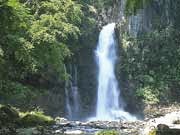


Iya Valley area / Iya's Kazura Bridge:  Vine-made suspension bridge over the Iya-gawa River.  A 200 meter high-cliff-created by the river.


Sports & Entertainment:


Japan is in FIFA World Cup Brasil 2014.


Main football stars in Japan's team are:


Shinji Kagawa (attacking midfielder who currently plays for english club Manchester United), he is known for his "vision, technique, movement and deft passing", on november 29 2012 he was named Asian Football Confederation, International player of the year.


Shinji Okazaki (he currently plays for FSV Mainz 05 of German Bundesliga).  Okazaki finished as top goalscorer in the Asian Section of qualification for the 2014 FIFA World cup with eight goals.
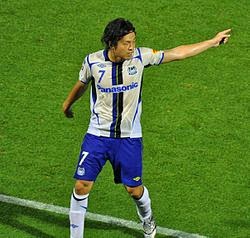


Yasuhito Endo, central midfielder (Japanese player who currently plays for the J. League team Gamba Osaka) he is considered a cult hero at Gamba Osaka and the Japan National football team because he has a formidable passing ability, leadership and goal scoring ability; 

and Keisuke Honda, attacking midfield player (who plays for Serie A club Milan) he is also known for his free-kicks, dribbling and ability as a dead ball specialist. Sources: en.wikipedia.org,  thesinguardian.com, es.fifa.com.


Also Japan has won the bid to host the 2020 Olympic and Paralympic games.

The most influential Japanese animes:


Japanese animation or "Anime" is a style of animation known by exaggerated features (such as big eyes, oddly colored hair, etc.) animes portray fantastic stories usually about supernatural powers that is not only beautiful to watch but also entertaining.


Dragon Ball Z is one of the most watched animes that have ever been shown in world television, this is a japanese manga series that was written and illustrated by Akira Toriyama.  


Saint Seiya is a japanese manga series that was adapted into an anime television series from 1986 to 1989.  The story revolved aroun mystical warriors called saint who wore sacred armors called cloths.  These saints pledged to protect the reincarnation of athena in her fights against the olimpian Gods who sought to gain rule over the Earth.


Naruto is an ongoing japanese manga series written and illustrated by Masashi Kishimoto, the plot tells the story of Naruto Uzumaki, an adolescent ninja who constantly dreams of becoming the next Hokage (the leader in the ninja village).


Death Note is probably one of the most mind bending anime around; this is a japanese anime series featured a high school student named Light Yagami, who discovered a supernatural notebook that was dropped on earth byt the god of death Ryuk; this notebook granted its user the ability to kill anyone he/she could identify.


Source: www.list25.com


Sailor Moon, known in Japan as Pretty soldier Sailormoon or pretty guardian Sailor Moon is a Japanese multimedia franchise series written and illustrated by Naoko Takeuchi.  Fred Patten credits Takeuchi with popularizing the concept of a team of magical girls.  The story of various metaseries revolves around the rebond defenders of a kingdom that once spanned  the solar system and the evil forces that they battle.  Sources: en.wikipedia.org, meetup.com


"Candy Candy"(キャンディ・キャンディ)  Japanese Cartoon, a collection of Candice White Audrey art drawings is a Japanese novel, manga and anime series.  Their first appeared in a prose novel by famed japanese writer Kioko Mizuki (pen name of Keiko Nagita)  in April 1975, and illustrated by Kumiko Igarashi.  The story was adapted into an anime series with 115 episodes by Toei animation and broadcast in october 1, 1976 to February 2, 1979.  There are also several movies which were never released outside of Japan  Sources:  en.wikipedia.org, animecovers.tmblr.com
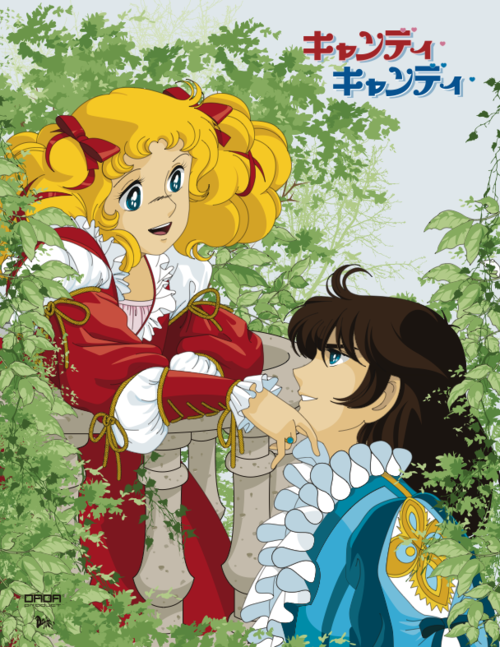


Candy Japanese opening theme. 

https://www.youtube.com/watch?v=YquP9Nsdbxk
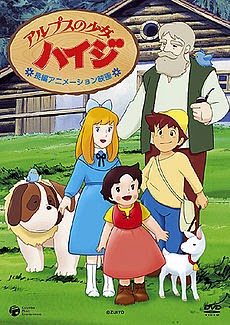


Heidi, Girl of the Alps (アルプスの少女ハイジ Arupusu no Shōjo Haiji is a 1974 japanese anime series based on the swiss novel Heidi's years of wandering and learning by Joanna Spyri (1880).  It was directed by Isao Takahata and features contributions by numerous other anime legends.  Heidi is one of the masterpiece theater titles produced around the "classical children's literature period (1974-1997) based on classic tales from the Western World.  Source:  en.wikipedia.org


Heidi Japanese opening theme.
https://www.youtube.com/watch?v=5hKi1VlE94A


Food:

Japanese cuisine offers a very large variety of dishes and regional specialities.

Japanese curry is a dish that is hugely popular in Japan and it is usually served with rice and the term "curry rice" is mentioned often.  The usually ingredients in Japanese curry are potatoes, carrots, onion and meat.  The sauce itself is usually made from curry powder or roux which is a blend of basic indian spices.


A common variation of Japanese curry is Katsu Kare (カツカレー),  

which is a dish of regular japanese curry rice plus a piece of 

deep-fried  pork  cutlet put on top.
Japanese curry is usually eaten with a large Westerm style spoon.  It is often accompanied with a garnish of fukujinzuke (a slightly sweet mix of pickles) or rakkyo (pickled japanese scallion).


Fresh seafood Sushi:


Ramen:  This is one of the favourite foods of japaneses.  This is a clear soup which has a light flavour and its made of chicken.


Tuesday, March 25, 2014

United States of America (USA)


The United States of America (USA) is a Federal Republic consisting of 50 states and a Federal district.  48 Contiguous states and the district of Washington D.C. are located in North America, between Canada and Mexico, and the state of Alaska is located in the Northwestern part of North America and the state of Hawaii is an archipielago in the mid-pacific ocean.


Flag:


Government:


The United States is the world's oldest Federation.  It is a constitutional republic and representative democracy.  Currently the president is Barack Obama and Vicepresident Joe Biden.

The White House used by the U.S. president.


People / Population:

The US Census bureau estimates the country's population now to be 317,780,000 including and approximate  11.2 million illegal inmigrants.


Economy:  

The United States has a capitalist mixed economy which is fueled by natural abundant resources and high productivity.  The U.S. dollar is the world's primary reserve currency.  

The United States is the largest importer of goods and second largest exporter, though exports per capita are relativerly low. 

The United States is the third larger producer of oil in the world. as well as largest importer.  It is the number one producer of electrical and nuclear energy, as well as liquid natural gas, sulfur, phosphates and salt.


Famous people:

Elvis Presley (January 8, 1935 - August 16, 1977):

"I didn't know what I wanted to do as a kid.  But I used to pray to God that I'd amount to something some day.  I never dreamed that something like this would happen."

Elvis Aaron Presley was an American Singer, musician and actor.  He became one of the most influential cultural icons of a generation.  He is commonly referred to as the "The King of Rock 'n' Roll" and epitomises the post-war pop generations.   Source:  www.briographyonline.net


http://www.youtube.com/watch?v=KUpfHDUAbpI


Johnny Depp (June 9, 1963):

John Cristopher Depp II is an american actor, screen writer, director, film producer, musician and painter known artisticaly as Johnny Depp.  He was nominated by three time to the Oscar and winner of the Gold globe award and Screen Actors Guild award for the best actor.  

He played the title character of the acclaimed Edward Scissorhands (1990) and later found box office success in films such as Sleepy Hollow (1999) , Pirates of the Caribbean film series (2003-present), Charlie and the chocolate Factory (2005), Alice in Wonderland (2010) and the film Rango.  He has collaborated with director and friend Tim Burton in eight films, the most recent being Dark Shadows (2012).  Source en.wikipedia.org


Leonardo DiCaprio
(November 11, 1974)

Leonardo Winhelm DiCaprio is an American actor and film producer.  He has been nominated  for five academy awards and Ten Golden Globe awards.  He won the Golden Globe Award for Best Actor in a drama for "The Aviator" (2004) and the Golden Globe award for Best Actor in a Musical or Comedy for the Wolf of Wall Street (2013).  He has also been nominated by the Screen actors Guild, Satellite awards, and the British academy of Film and Television Arts.   Since 2000s DiCaprio has been nominated for awards for his work in several films.  Source:  en.wikipedia.org.

He wins Lead Actor 2014 Golden Globes.  Leonardo Dicaprio Foundation commits $3 Million to Oceana to protect sharks, marine animals and habitat  in the Pacific and Arctic Oceans.  Source:  www.leonardodicaprio.com


Marilyn Monroe (1926-1962)


Model, actress, singer and arguably one of the most famous women of the twentieth century.  "I am just a small girl in a big world trying to find someone to love" she said.  Source:  www.biographyoneline.net


John F. Kennedy (1917-1963):

"Ask not what your country can do for you-ask what you can do for your country" he said.

John F. Kennedy was America's second youngest elected president.  He sought to afirm America's belief in basic human rights by callilng for civil rights legislation and an attack on poverty  and degradation.

Assasinated in November 22, 1963, his tragic death shocked America and the world.


Walt Disney (1901-1966):

"Courage is the main quality of leadership, in my opinion, no matter where it is exercised.  Usually it implies some risk - specially in new undertakings.  Courage to initiate something and to keep it going, pioneering, and adventurous spirit to blaze new ways, often, in our land of opportunity."  The Disney Way Fieldbook (2000) by Bill Capodagli.

Walt Disney was an American Film Producer, media magnate, and co-founder of the Walt Disney company.  He was an iconic figure in the Twentieth Century median and entertainment industry, helping to produce many films.  With his staff he created famous cartoons characters, such as Mickey Mouse and Donald Duck; his name was also used  for the successful Disney theme parks.   During his lifetime he received a record 59 nominations for the academy awards, winning 22 awards.  Source:   www.biographyonline.net.


Bill Gates:

William Harry Gates was born on October 28, 1955 in Seattle Washington.  American businessman.     As founder of Microsoft, Bill Gates is one of the most influential and richest people on the planet.  Recent stimates of its wealth put it at  $56 billion.  In recent years he has retired from working full time at Microsoft, instead he has concentrated on working with his charitable foundation "The Bill and Melinda Gates foundation".  Source:  www.biographyonline.net


Michael Jackson (August 29, 1958- June 25, 2009):

Michael Joseph Jackson was an American singer, dancer, entertainer, and recording artist.  Michael Jackson epitomised the era of pop in 70s, 80s and 90s earning himseld the title "The King of Pop".  He remained a global icon until his  death in 2009.


http://www.youtube.com/watch?v=sOnqjkJTMaA


Famous Places:


The statue of Liberty in New York city is a symbol of both the U.S. and ideals of freedom, democracy and opportunity.


The Hollywood sign in Los Angeles California A representative symbol of the American film industry.


Disneyland Park:
Disneyland Park is a beloved Southern California destination where generations of families have made their Disney Dreams come true.


https://disneyland.disney.go.com/destinations/disneyland/


https://disneyland.disney.go.com/es/


History:

The American Revolution was the first successful colonial war of independence agains a european power.  American has developed and ideology of republicanism that held government rested on the will of the people as expressed in their local legislatures.  The Congress adopted the Declaration of Independence on July 4, 1776, proclaiming than humanity is created equal in their inalilenable rights.

National language:  English

Currency:  United States Dollar  $ (USD)

Culture:
The culture of the United States is primarily Western, but it is influenced by Native American, African, Asian, Polinesian and Latin American Cultures.

Food:

Mainstream American Cuisine is similar to that in other Western countries.  Wheat is the primary cereal grain.  Traditional American cuisine uses indineous ingredients such as turkey, venison, potatoes, sweet potatoes, corn, squash, and maple syrup which were consumed by Native Americans and early European settlers.

Slow cooked pork and beef barbecue, crab cakes, potato chips, and chocolate chip cookies are distinctively american foods.  

Characteristic dishes such as apple pies, fried chicke, pizza, hamburgers and hot dogs derive from the recipes of various inmigrants.  Source:  en.wikipedia.org.

American generally prefer coffe to tea.

Education:

American public education is operated by state and local governments, regulated by the United States department of education through restrictions on federal grants.

In most states children are required to attend school from the age of six or seven (generally Kinder garden or first grade).

The United States has many competitive private and public institutions of higher education.

Major US Colleges and Universities.

http://www.collegesanduniversities.us/major-colleges.htm


Sports:

Baseball is the oldest of the major American team sports.

American Football, known in the United States as simply "football" now attracts more Television viewers than any other sport and  is considered to be the most popular sport in the United States.

Basquetball is another major sport represented professionally by the National Basquetball Association.

Ice hockey is the fourth leading professional team sport.


Arts:

Literature:  Mark Twain is regarded as among the greatest writers in American history.  Mark Twain, Henry James and poet Walt Whitman were major figures in second half.


Mark Twain.

Music:

Music of USA reflect a mixture of its population in several styles such as hip hop, blues, country, jazz, metal, pop and rock & roll. 

2014 music

http://www.youtube.com/watch?v=NmlTQRCdjDs

80s MUSIC

http://www.youtube.com/watch?v=D3IplzwMRfY


Donna Summer

http://www.youtube.com/watch?v=C2q2bis6eLE

Gloria Gaynor
http://www.youtube.com/watch?v=7SxqJsYFL-Q

http://www.youtube.com/watch?v=TTTur3q-VKc

Juice Newton:
http://www.youtube.com/watch?v=HTzGMEfbnAw

Sheena Easton:

http://www.youtube.com/watch?v=Ugl3pd8LUhA


Monday, March 24, 2014

Canada

Canada is a sovereign country located in North America.  Its capital is Otawa.  Territory of Canada is divided in ten provincies and three territories.  The most populated city is Toronto.


Flag of Canada:


Culture:

The official languages in Canada are English and French languages.  

Canada's culture is influenced from its broad range of constituent nationalities and policies that promote multiculturalism are constitunionally protected.

Government:

Canada is a federal parliamentary democracy and a constitutional Monarchy with Queen Elizabeth II as its head of state.  Governor General is David Johnson.  Prime Minister is Stephen Harper.  Chief Justice is Beverly MacLachlin.
Parliament Hill in Canada's capital city Ottawa.
Economy:

Its advanced economy is one of the largest in the world relying chiefly upon its abundant natural resources and well devoloped trade network.  Canada's long and complex relationship with the United States has had a significant impact on its economy and culture.

Canada participates in economic international and intergovernmental institutions or groupings including the G8 (Group ot the eigth), the group of ten (economic), the group of Twenty (G-20 major economies), the North American Free Trade agreement and the Asia-Pacific Economic Cooperation forum.


Wednesday, March 19, 2014

Ireland

Ireland is the third biggest island in Europe.  This is located in the Atlantic ocean off the North-Western coast of mailand Europe.    Location of Ireland is green colored.


Government:  

The republic of Ireland is a parliamentary democracy based on the Westminister model with a written constitution and a populary elected president who has mostly ceremonial powers.  The government is headed by a prime minister, the Taoiseach who is appointed by the President on the nomination of the lower house of parliament, the Dail. Members of the parliament are chosen from both, the Dáil and the upper house of parliament, the Seanad.  Its capital is Dublin.


Economy:

A period of rapid economic expansion from 1995 onwards became known as the Celtic Tiger period, was brought to and end in 2008 with an unprecedented financial crisis and economic depression in 2009.


Culture:  Irish culture has had a significant influence on other cultures, especially in the fields of literature and to a lesser degree science and education.  A strong indigenous culture exists, as expressed for example through Gaelic games, Irish music, and the Irish language.  The culture of the Island shares many features with Great Britain, including the English language and sports such as  association football, rugby, horse racing, and golf.


History:  The earliest written records of Ireland come from classical Greco-roman geographers.  The title of King of Ireland wasw re-created in 1542 by Henry VIII, the King of England, of the Tudor dynasty.  English rule of law was reinforced and expanded in Ireland during the latter part of the 16th century, leading to the Tudor conqueswt of Ireland.  A near complete conquet was achieved bye the turn of the 17th century, following the Nine Year's war and the Flight of the Earls. (Wikipedia accesed on March 19/2014)
Food:  The traditional food of Ireland are two:  Irish Stew and Corned Beef with Cabbage. And almost every visitor to Ireland is surprised to find that neither features all that commonly on restaurant menus.  Corned beef is not traditionally Irish at all – but Bacon and Cabbage is.

Irish Stew


Tripe and drisheen


Crubeens or pigs trotters, tripe (pigs stomach) and drisheen (a blood sausage) were all popular dishes and are still eaten in parts of the country, notably Cork. 


The killing of the pig was a ritual in which neighbours came together to complete the work, with everyone getting a parcel of meat to take home. In that way each time a pig was killed, several families had food. Since there was no refrigeration, what was not eaten fresh was cured or salted, and hence bacon became a very important part of the Irish diet.


Customs:
St Patrick is a special holiday in Ireland.  This day everyone wears green and thinks green. Saint Patrick is deepled rooted in heart of Christianity in Ireland.  He is the most celebrated christian since year 432.  When he was a teenager was captured in Gales and he was trasladated to an island where he worked taking care of a flock of sheeps in the Slemish mountain in County Antrim. He was there during six years that was the place where he found consolation of God.  This fact served of inspiration to Saint Patrick.  


Sight Scenes:

Croagh Patrick, County Mayo.


This name, Coragh Patrick means the Patrick's Mountain, which is a place where about 3000 pilgrims per year walk barefoot along this mountain until the top.  This place was where St Patricks fasted such as Jesus in desert, 40 days in Cuaresm.

Wednesday, March 5, 2014

Northern Ireland

Northern Ireland is a part of the United Kingdom in the north-east of the island of Ireland. Northern Ireland shares a border to the South and west with the Republic of Ireland.


History:


Northern Ireland was created in 1921 when Ireland was partitioned between Northern Ireland and Southern Ireland by and act of the British Parliament.  Unlike Southern Ireland, which would become the Irish Free State in 1922, the Majority of Northern Ireland's population were unionists or loyalists, who wanted to remain within the United Kingdom.

People in Northern Ireland has faced several battles in the attempt of deffending their communities, discrimination, laws and religions; also in an attempt to quell sectarianism and force the removal of discriminatory laws (and to prevent the spread of French-style republicanism  to Ireland), the government of the Kingdom of Great Britain pushed for the two kingdoms to be merged.  The new state, formed in 1801, the United Kingdom of Great Britain and Ireland, was governed from a single government and parliament based in London.

During the 19th century, legal reforms started in the late 18th century removed statutory discrimination against Catholics and progressive programmes enabled tenant farmers to buy land from landlords.  By the close of the century, autonomy for Ireland within the United Kingdom, known as Home Rule, was regarded as higly likely.  In 1912, it became a certainty.  The House of Lords veto had been the unionists' main guarantee that Home Rule would not be enacted, because the majority of members of the House of Lords were unionists.
Signing of the Ulster Covenant in 1912 in opposition to Home Rule.


Ireland was partitioned between Northern Ireland and Southern Ireland in 1921 under the terms of Lloyd George's Government of Ireland Act 1920 dudring the war of independence between Ireland and British forces.  At the conclusion of that war on 6 December 1922, under the terms of the resulting treaty, Northern Ireland provisionally became an autonomous part of the newly independent Irish Free State, with the right to opt out of it.


Politics:


Tuesday, March 4, 2014

Wales


Wales is a country that is part of the United Kingdom, its bordered by England to its East and  the Atlantic Ocean and Irish Sea to its West.


History:

Welsh national identity emerged among the celtic Britons after the roman withdrawal from Britain in the 5th century and Wales is regarded as one of the modern Celtic nations.

Wales shares a close political and social history with the rest of Great Britain, and almost every one speaks English; the country has retained a distinct cultural identity and is officially billingual.  The whole of wales was annexed by England and incorporated within the English Legal System.  Welsh national feeling grew over the century 19th and the Welsh Language Society was formed in 1962.

The English words "Wales" and "Welsh" derive from the same Germanic roots.

Government and politics:

Wales is a country that is part of the United Kingdom.  Constitutionally the UK is a unitary state, its parliament in Westminster.  Scotland, Wales and Northern Ireland which along with England are the four constituen countries of the United Kingdom have a degree of autonomous devolved power - the Scottish government and Scottish parliament in Scotland, the Welsh government and National Assembly for wales in Wales and the Northern Ireland Executive and Northern Ireland Assembly in Northern Ireland.  Such devolved power is only delegated by Britain's central government, specifically by the Parliament of the United Kingdom which is supreme under the doctrine of parlilamentary Supremacy.

Carwin Jones is the first minister of Wales since December 2009.


Climate:

If you are planning to visit Wales, here you can find its climate in all the seasons of the year. Wales lies within the north temperate zone.  Its climate is changeable and is one of the wettest countries in Europe.  Welsh weather is often cloudy, wet and windy with warm summers and mild winters.  The long summer days and short winter days result from Wales' northerly latitudes (between 53° 43' N and 51° 38' N ).

At low elevations, summers tend to be warm and sunny.   Average maximun temperatures range between 19° C (66°F) and 22°C (72°F)  Winters tend to be fairly wet, but rainfall is rarely excessive and teh temperature usually stays above freezing.  spring and autum feel quite similar and the temperatures tend to stay above 14°C (57°F) also the average anual daytime temperature.

The sunniest time of year tend to be between May and August.


Economy:

Lets know some aspects of Wales economy, since over the last 250 years wales has been transformed first from a predominantly agricultural country to an industrial, and now a post-industrial economy.  

Port talboot steelworks - once the largest employer in Wales.


The pound sterling is the currency used in Wales.  British coin one pound (£1) is a denomination of the pound sterling.  Its obserse has featured the profile of Queen elizabeth II since the coin introduction in 1983.  Three different portraits of the queen have been used.


Education:

A distint education system has developed in wales.  Wales was forced to adopt and education system that was English in ethos even thought the country was predominantly non conformist, Welsh+speaking and democraphically uneven because the economic expansion in the south.  In some schools, to ensure Elsh children spoke English at school, the Welsh not was used.  State and local govenmental edicts resulted in schooling in the English language.   

The University College of Wales opened inAberystwyth in 1872.  Cardiff and Bangor followed and the three colleges came together in 1893 to form the University of Wales.

Saint Davis Building, Lampeter Campus, University of Wales, Trinity Saint Davis.